
Easton Address History by Record Era
Previous residents research works because Easton has several records with different time ranges and purposes. County assessment and GIS give present-day parcel clues. Recorded deeds identify transfer parties and legal descriptions. Easton city directories can connect a name or business to an address in a particular volume, while newspapers and obituaries can help establish a date window. Sanborn maps describe the building and street setting, not a resident. Census and probate material add household or estate context when their access rules allow it.
| Source | Years or scope | Where held | What it can show |
|---|---|---|---|
| Recorded deeds | Northampton deeds begin in 1752 in the State Archives guide; online cutoff not verified | Recorder, Landex, Archives, State Archives | Grantor, grantee, recording reference, and legal description. |
| Assessment and GIS | Current public service | County Public Access and GIS | Tax owner and mailing clues, situs, parcel IDs, sale and deed references. |
| Easton city directories | Holdings begin in 1855 | Marx Local History Room | Time-specific name and address evidence in the actual volume. |
| Local newspapers | Microfilm begins in 1799 | Marx Local History Room | Obituaries, moves, business notices, and social notices. |
| Sanborn maps | April 1904 Easton and South Easton set | Library of Congress | Building footprint, use, and historical address geography. |
| Federal census | Public release follows the 72-year rule; 1950 is the latest open census in 2026 | Federal census and library research access | A household and place snapshot, checked against its enumeration district. |
Begin with the source closest to the time in question. A recent transfer often starts with the parcel and deed clue. An older household question may start with a directory year, then move to a deed, newspaper, or census. No one source establishes every past resident, and an owner or tax contact is not automatically an occupant.
Easton Parcel Clues Start the Past-Resident Trail
Use Northampton County Public Access and county GIS as connected but different starting points. The Public Access gateway offers Address, Parcel, Sales, Advanced, and Map Search modes. If an address does not resolve, a parcel search or map search can bridge differences in formatting, apartment suffixes, historic street names, postal Easton labels, and tax-address conventions. Save the situs, parcel ID or CAMA ID, tax map and block information, municipality, sale clue, and deed reference before working backward.
GIS provides the detail that keeps the old and new records together: parcel ID, CAMA ID, map/block/lot, municipality, LOCATION, owner lines, mailing lines, deed reference, sale fields, and property facts. LOCATION is the situs field. Mailing lines tell where the tax bill goes, which can be a different home, post-office box, trust, attorney, organization, or management contact. The tax site calls itself a demonstration and warns that accuracy and currency are not guaranteed, so use its result as a lead and confirm a material fact with a recorded document or custodian.
Note: Preserve the parcel and legal-description clues because old deeds may omit the modern street number printed on a current tax record.
Trace Easton Previous Residents Through Landex
For title history, the Pennsylvania Real Property Official Records gateway begins with selecting Northampton County. The county Archives specifically directs house-history researchers to Landex grantor and grantee indexes, available online and at Recorder and Archives terminals. Search by people, not just a street number. The party sequence is the dependable way to move backward when an old deed uses a lot, block, UPI predecessor, metes-and-bounds, or subdivision description.
The Pennsylvania Real Property Official Records gateway shown below is the official search starting point for this step.
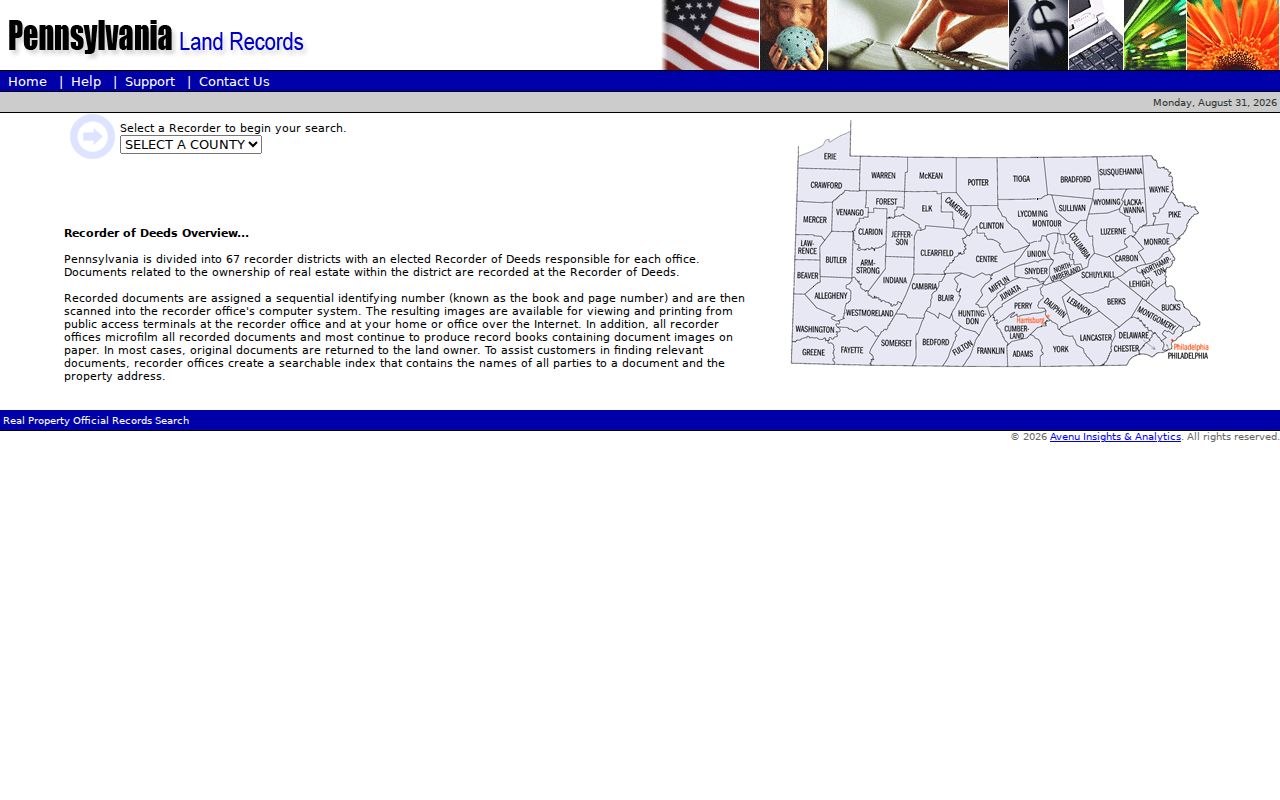
Choose Northampton County, retain the recording reference, and compare the legal description from each result before treating two similar addresses as the same property.
- Use the county parcel record to identify the current owner and acquisition or deed clue.
- Find that acquisition in the Northampton recorder index and record the grantee, grantor, recording date, document number or book and page, and legal description.
- Search the seller from that deed as a grantee to find the earlier acquisition.
- Repeat the role reversal, comparing the legal description and lot information at every step.
- When online results do not reach the needed era, use a Recorder or Archives terminal and the State Archives guide or microfilm route.
- Grantor
- The party transferring an interest in a recorded instrument.
- Grantee
- The party receiving that interest. In the backward method, a prior seller is searched as grantee for an earlier purchase.
- Chain of title
- The connected sequence of recorded transfers for the same property, checked through its legal description.
- Legal description
- The lot, block, UPI, metes-and-bounds, or other formal property wording that can outlast a street-address change.
Easton Deeds Before the Online Route
Northampton County was created in 1752, and the Pennsylvania State Archives guide documents Recorder of Deeds material from that first county era, including deeds for 1752 through 1866. The public recorder gateway did not display an exact online start date, so an absent online hit cannot be treated as the end of an Easton property history. The county Archives preserves historic material from more than 30 county offices and 48 filing systems, while the State Archives guide identifies the older deed books and microfilm.
Use the Pennsylvania State Archives Northampton County guide to identify the historical set, then consult the relevant recorder or archival access channel. The Archives also says its civil continuance docket books for 1753 through 1979 can help locate a civil file number when an older civil index does not yield one. That is a file-location tool, not evidence that a named party lived at the address.
Past Easton Households Between Census Years
Deeds trace title, but past residents require a household layer. The Marx Local History Room holds Easton city directories beginning in 1855, local newspapers on microfilm from 1799, maps, family files, yearbooks, and church and cemetery material. The library has not published a complete online shelf list, publisher list, reverse-directory run, or final printed year. Ask staff to confirm the specific annual volume and whether it includes a street or reverse section before relying on it for an address.
For an Easton household trail, use the Easton city directory collections as the collection reference, then make a dated comparison rather than treating a directory as a complete resident list.
- Copy the address, name spelling, printed year, and page exactly from the directory.
- Check an adjacent volume for the first or last appearance at that address, if the Marx Room holds it.
- Pair the resulting date interval with the public federal census closest to it, checking the enumeration district and location.
- Use a deed, tax assessment, obituary, probate docket, or newspaper notice to test a departure, death, transfer, or family connection.
An entry can include a street address, occupation, business affiliation, spouse or widow notation, and printed abbreviations. Transcribe what the volume actually prints. An absent person should not be added to a household simply because a surname appears in the same source.
Close Easton Previous Resident Trails
When a directory or deed trail reaches a death or transfer, the next Easton record may be an obituary or estate route rather than another address search. Marx Room resources include local newspaper microfilm since 1799, obituary indexes, and request forms. A confirmed death date can supply a useful time window. The Register of Wills and Clerk of Orphans’ Court is the county custodian for estates, trusts, guardianships, and marriage-related functions. An estate file may identify a fiduciary or the record path, but a shared surname or address does not establish kinship.
Use the Orphans’ Court procedure and permitted copies for an estate question. County-held historic birth and death certificates from 1893 through 1936 have their own availability rules, while modern Pennsylvania vital certificates remain restricted to eligible requesters. An obituary, probate date, directory departure, and deed transfer can be compared as separate dated facts. The combination can clarify a house history without turning a previous-residents search into a claim about living people.
South Easton Stops a False Address Match
The April 1904 Sanborn collection is a useful location check because the Library of Congress catalogs Easton with South Easton as an alternate name. A historic directory, newspaper, or map can use that older label even when a current property search begins with Easton. The 37-sheet map set shows building footprints, materials, use, and street context at its map date. It does not name occupants, prove an address was renumbered, or establish a person lived there.
The Library of Congress Easton and South Easton map collection supplies the documented building layer. Compare it with present GIS parcels and the historic directory form. The research found no authoritative citywide street-renumbering or renamed-street table. Keep the historic spelling or neighborhood label in the research notes instead of forcing it into a modern form.
Easton Archives for an Offline Address Trail
When a deed, directory, or map leaves a gap, the Northampton County Archives is the documented offline route. It is at 999 Conroy Place in Forks Township and offers historical research from its collection of roughly 270 years and 48 filing systems. Its general request form includes deed, civil or criminal court, tax assessment, Orphans Court, and estate or probate categories. Give the office the names and variants, date range, municipality, record type, and known reference rather than making a broad request.
The Northampton County Archives research route below is the documented historical-research alternative.
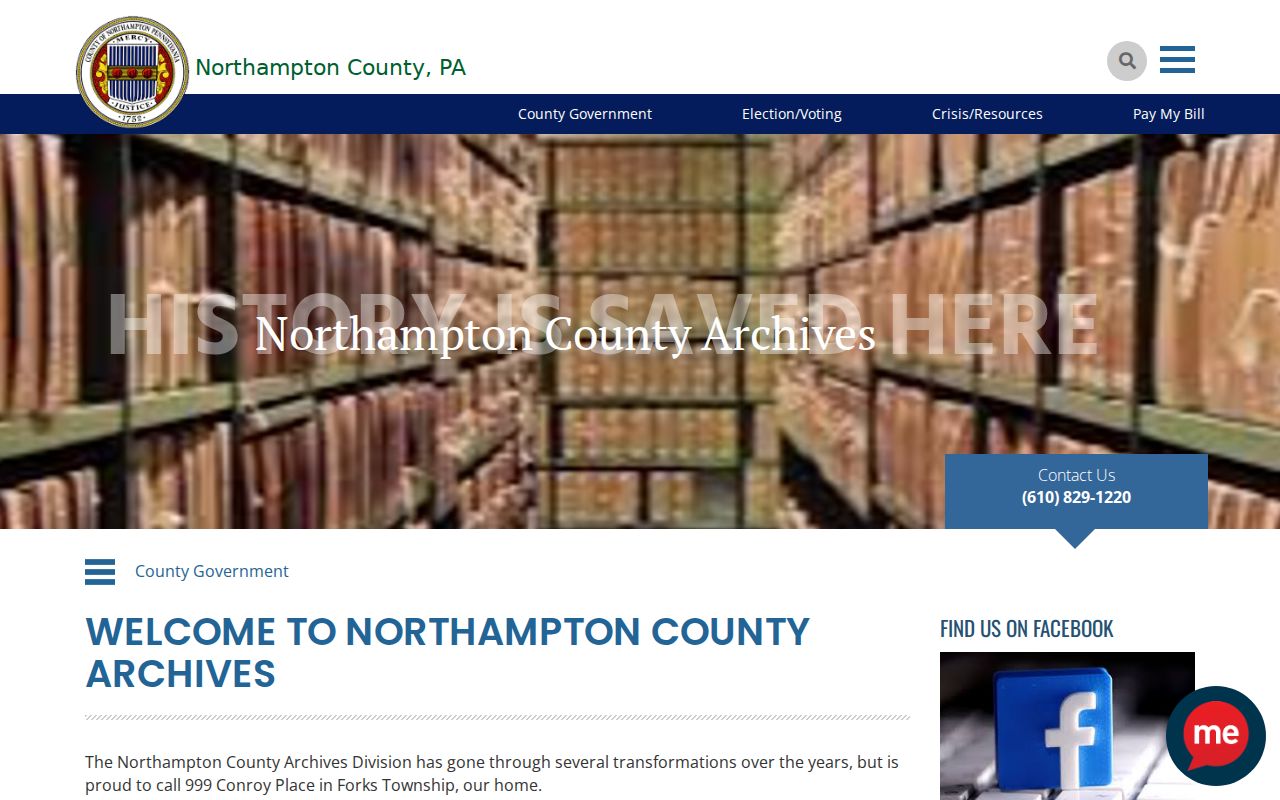
In-person historical research has no research fee. Remote mail or email name searches cost $5 per name, copies cost 50 cents per page, and the Archives cannot issue certified copies. Historic request forms may be emailed to SFerry@norcopa.gov. Call first when a civil file or fragile material is involved.
The free Northampton County Landex RecordAlert service can monitor up to five names and five parcel or UPI entries for one email or phone combination. Its alert reports the monitored name, recording date, instrument number or type, and municipality.
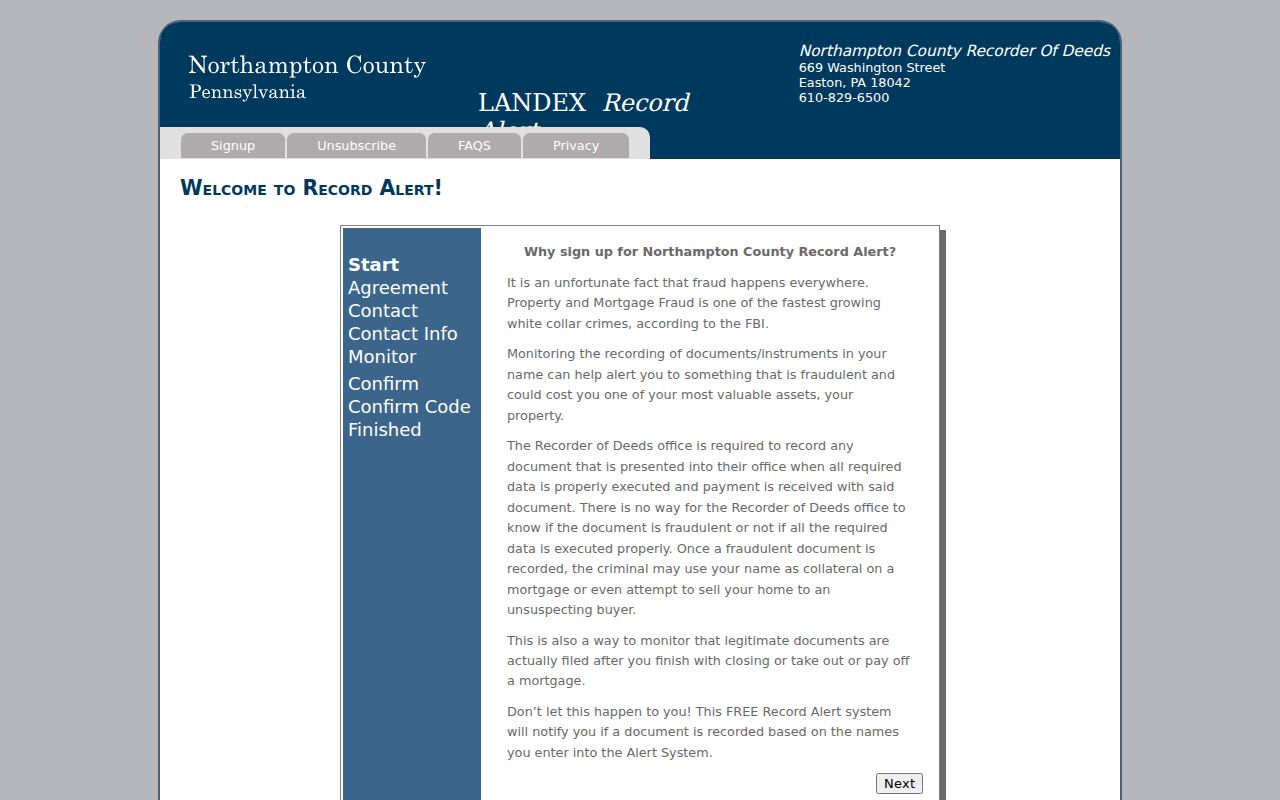
RecordAlert is useful for new-record awareness and property-fraud monitoring. It does not validate a transaction or establish that someone resides at a property.
Note: Older Easton address research may require the Recorder, Archives, Marx Room, and State Archives because each custodian holds a different record layer.