
Search Easton Resident Records
Easton has no single public roll of everyone at every address. Start with the fact already known. A current street address points toward Northampton County Public Access and GIS. A property owner or a deed reference points toward the Recorder of Deeds and Landex. A dated name may be better checked in a court docket, an estate file, or a historical directory. Each record has a different purpose, and none by itself establishes an entire household or current occupancy.
Use a second, independent record before treating a result as meaningful. Compare name spelling, date, street or municipality, and the role shown in the source. A tax owner can be a trust, an estate, or someone who receives correspondence elsewhere. A person listed in a court caption can share a name with another Easton resident. The right process is narrow, date-aware, and tied to the office that created the record.
- Begin with the county property search when you have a current Easton address or parcel clue.
- Save the situs, parcel or UPI identifier, municipality, sale clue, and deed reference rather than relying on a name alone.
- Use the Recorder index to inspect the deed trail, then compare the transaction with GIS parcel geography.
- For one person, narrow a court or state record with a date, role, or other independent detail.
- For an earlier household, take the time range to the Marx Local History Room and its Easton directory and newspaper collections.
Note: A missing web result can mean an office-only, archival, protected, or too-recent record, not that the record never existed.
Easton Resident Records Desks
Easton is Northampton County’s seat, so several county custodians are concentrated at the Government Center on Washington Street. The Recorder of Deeds manages land instruments. Assessment and GIS connect a street address to a parcel. The Register of Wills and Clerk of Orphans’ Court handles estates, marriage functions, guardianships, and county-held historical vital records. City Hall is the separate route for city-created records such as permit or code files. The county Archives in Forks Township supplies an important historical fallback.
Northampton County Recorder of Deeds
669 Washington Street
Easton, PA 18042
Northampton County Assessment and GIS
669 Washington Street
Easton, PA 18042
Register of Wills and Orphans’ Court
669 Washington Street
Easton, PA 18042
610-829-6488
County offices publish weekday hours of 8:30 a.m. to 4:30 p.m. The address-based detail belongs in the Easton street directory, while the office card is the useful first stop when a portal does not answer the question.
Easton Parcels Through Public Access
Northampton County Public Access opens with Address, Parcel, Sales, Advanced, and Map Search routes. Address and Map Search are practical when an Easton street is known. Parcel search is stronger when the address has changed form or a UPI is already available. The landing page calls the service read-only demonstration access and cautions that accuracy and currency are not guaranteed. Treat the result as a discovery lead, then confirm a material ownership or title point with the correct custodian.
| Public Access route | Best Easton use | What to retain |
|---|---|---|
| Address | Find a current parcel from a street address | Situs, municipality, parcel clue |
| Parcel | Return to a known tax-map or UPI record | Identifier and property location |
| Sales | Check a transaction clue after access is available | Date and sale reference |
| Map Search | Locate an Easton parcel visually | Geography before an office request |
The county property-record gateway displays those available search modes.
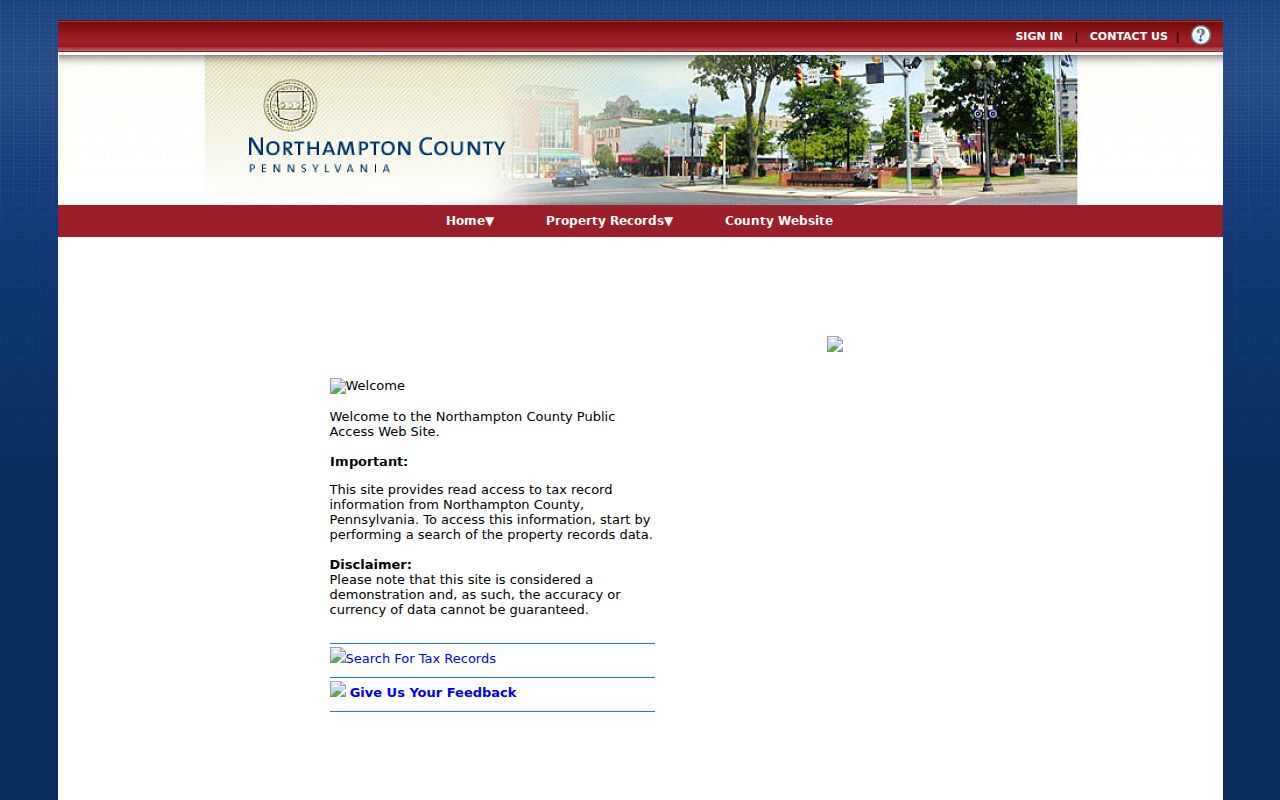
Those choices support parcel research, not a verified list of everyone who lives at an Easton address.
Link Easton Parcels to Deeds
The parcel record and the recorded-document index answer different questions. The assessment result can supply a deed reference, owner name, situs, and parcel identifier. In the Pennsylvania Land Records gateway, select Northampton County before searching. Landex is the practical route for a grantor and grantee chain. Search the current owner or deed clue, record the grantee, grantor, date, book and page or instrument number, and legal description. Then look for the prior party’s acquisition to move backward.
Recorder images can be viewed at a public terminal and may be available online according to the county’s implementation. Historic access does not stop at the web interface. The Archives says Landex indexes are available online, at the Recorder office, and at Archives terminals. Its State Archives guide documents Northampton deeds beginning in 1752, including deed books on microfilm. A certified copy remains a courthouse matter, while the Archives cannot issue certified copies.
- Parcel or UPI
- A county tax-map identifier that helps keep an Easton property tied to the correct land record.
- Situs
- The physical property location shown in a tax or GIS record.
- Grantor and grantee
- The party transferring an interest and the party receiving it in a recorded document.
- Legal description
- The lot, block, UPI, or boundary description that can outlast a street-number change.
Note: A recorded transfer identifies transaction parties and property, but it should not be read as proof that either party occupies the address today.
Read Easton Mailing and Situs Fields
The county GIS parcel service joins assessment information through CAMA_ID. Its public schema can expose parcel and map identifiers, municipality, LOCATION, deed reference, owner lines, mailing-address lines, values, sale data, acreage, building details, and exemption flags. That field list makes Easton property research more specific than a plain name search. It also demands care. LOCATION is the property situs, while the mailing lines show where the tax bill is sent.
A mailing line may belong to a post-office box, trustee, business, or another contact address. Owner lines identify tax-roll ownership, not every household member or a current resident. The current tax service also has a currency disclaimer. Compare parcel geometry, municipality, owner and deed data before relying on a result. The parcel service can support public queries and map work, but it is not a deed-image repository.
Easton Resident Directory Sources Today
Current Easton records are purpose-built sources, not a universal residents directory. The county property roll gives tax ownership and location clues. Recorder records name parties to recorded instruments. UJS dockets identify parties and case roles. Pennsylvania Voter Services lets an eligible individual check personal registration and polling information, but it is not a street roster. The city staff directory is a directory of public officials, not of city residents. These limits help prevent a searcher from treating a partial official source as a complete household list.
| Easton source | What it can confirm | Custodian | Access boundary |
|---|---|---|---|
| Tax and GIS parcel record | Tax owner, parcel, situs, mailing and sale clues | Northampton County | Public/read access with currency caution |
| Recorded document index | Deed or lien parties and recording references | Recorder of Deeds | Search and image terms vary |
| UJS docket sheet | Case party, role, court, date and status | Pennsylvania Judiciary | Protected matters and identifiers excluded |
| Personal voter status | A voter’s own registration and polling route | PA Voter Services | Not a general resident list |
| Professional license | License status or discipline | PALS | Association record, not residential proof |
A name that needs a court, vital, or license crosscheck calls for the more focused Easton resident lookup method.
Use Easton Voter Records Carefully
Pennsylvania Voter Services is the official route for a voter’s own registration status and polling information. The research did not verify public form labels because the live form was protected by anti-bot controls. That is a useful reason to avoid claiming a field list or street-search function that was not observed. Northampton County Election Division, at the Government Center, is the county contact for election administration and controlled request procedures.
Pennsylvania law permits inspection of particular election material and establishes regulated voter-list procedures. The request form includes a $20 electronic Public Information List, Street List, Walking List, and full voter export options, but its signed affirmation restricts use to elections, political activities, or law enforcement and prohibits Internet publication or unrelated use. A protected voter may be excluded. That controlled civic channel must never be turned into an Easton household or street directory.
Check Easton Dockets and Estates
The UJS Case Search provides covered public docket sheets. Its participant search includes County, participant last and first name, date of birth, docket type, case status, and filed-date start and end fields. Narrow to Northampton and use a limited date range or a distinguishing detail when a name is common. A docket sheet normally shows a docket number, court, caption, participants and roles, filing or event entries, and status or date context. It does not promise the complete case file.
The County Court of Common Pleas and its divisions are the local custodian route for current files and certified copies. Estate questions can lead to the Register of Wills and Orphans’ Court, but an estate fiduciary is not automatically an heir and protected family matters require custodian confirmation. The county Archives may view an older civil file only with an exact number and inventory confirmation. For a federal matter, PACER is a separate Eastern District of Pennsylvania system and should never be merged with a state docket just because names match.
The Northampton County Orphans’ Court information route provides Easton estate, marriage, and historical-vital contacts.
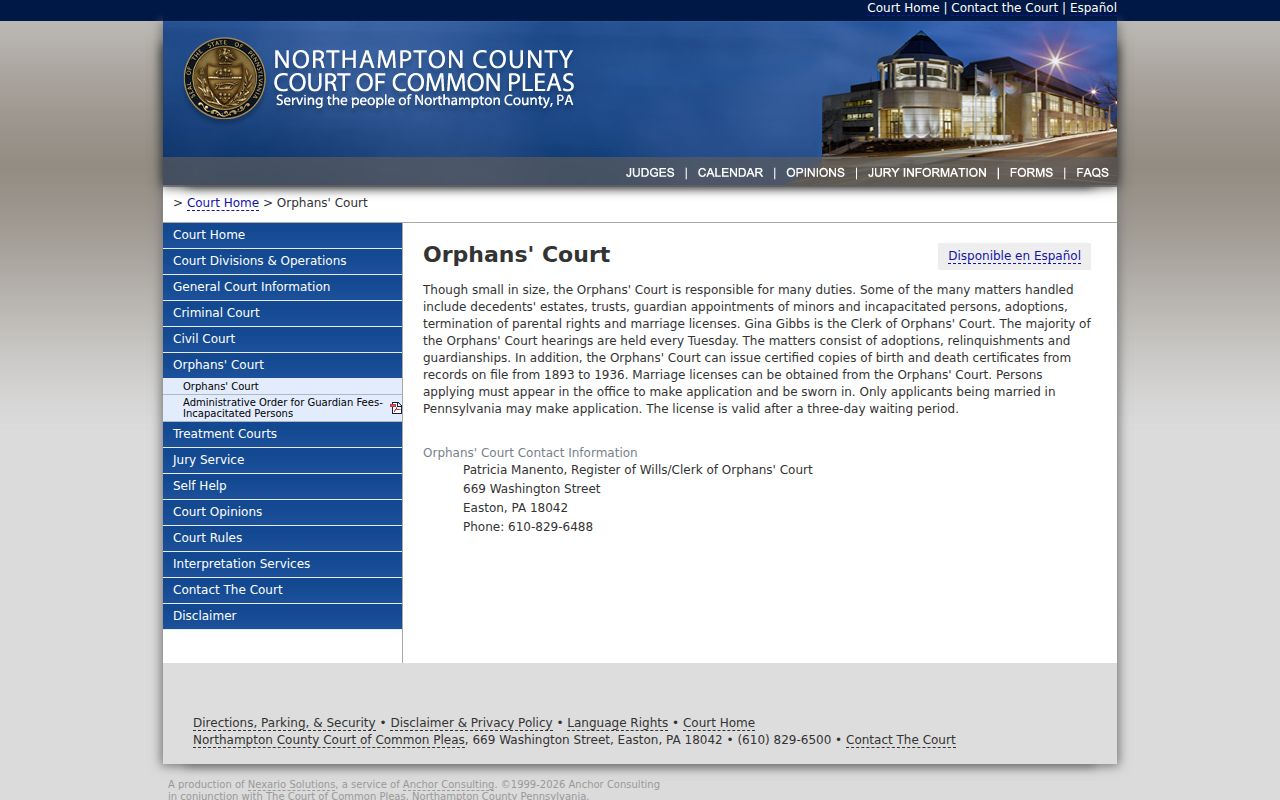
That official county channel is useful for custody and procedure, while the record’s access rules still control the actual result.
Find Easton History at Marx Room
The Henry F. Marx Local History Room at Easton Area Public Library is the key historical residents directory channel. At 515 Church Street, it holds more than 15,000 local-history and genealogy items, including Easton city directories beginning in 1855, local newspapers on microfilm since 1799, yearbooks, family files, maps, and more than 200 church and cemetery volumes. Its own tools include obituary and newspaper article indexes, 1799 to 1851 marriage and death extracts, a 1890 Northampton County Census Directory, and church-record indexes.
The Marx Room is open Monday through Friday from 10 a.m. to noon and 1 to 4 p.m., and Saturday from 9 a.m. to noon and 1 to 5 p.m. The phone is 610-258-2917. Take a surname, address, and narrow date range. Inspect the actual volume or ask staff about available years rather than assuming every year or a reverse directory is online. A newspaper or church-index result can help test the name found in an Easton directory.
Trace Easton Resident Directories Back
Northampton County’s historical record trail reaches to its creation on March 11, 1752. The State Archives guide documents recorder deeds from the first county era and assessment/list material beginning in 1761. The county Archives reports records from more than 30 offices across 48 filing systems. This history explains why a long Easton family or property question often crosses several custodians: public property data for the present, Landex and deed books for title, Marx Room volumes for local names, and Archives or State Archives microfilm for earlier material.
For an old address, the place name may be as important as the street. The Library of Congress’s free April 1904 Sanborn set has 37 Easton and South Easton sheets. A map shows buildings and use at its map date, not the people inside. Pair it with a directory, deed, obituary, or census record. The most recent public federal census in 2026 is 1950, so directory volumes can help fill the annual gaps between public census snapshots.
Note: The web sources verify directory holdings beginning in 1855, but not every annual run, publisher, or reverse-directory volume.
Request Narrow Easton Records
When an Easton record is not online, use the route that holds it. City Planning and Codes accepts address-specific questions about permits, zoning, inspections, code cases, and plans through its department channel or a focused municipal RTKL request. Research did not find a public searchable city permit or code-case index. State the number, street, approximate period, and requested record type. A broad request for all records about a person is less likely to identify a responsive nonexempt record.
Pennsylvania’s Right-to-Know Law, Act 3 of 2008, gives agencies five business days to respond to a sufficiently specific written request. A qualifying written extension can reach up to 30 days after that original period. The Office of Open Records is the appeal channel for a denial or deemed denial. For historical county material, the Archives accepts general research and naturalization forms by email, provides free in-person research, charges $5 per remote name search, and charges 50 cents per copied page. It cannot issue certified copies.
The Pennsylvania Office of Open Records provides the RTKL request and appeals resource.
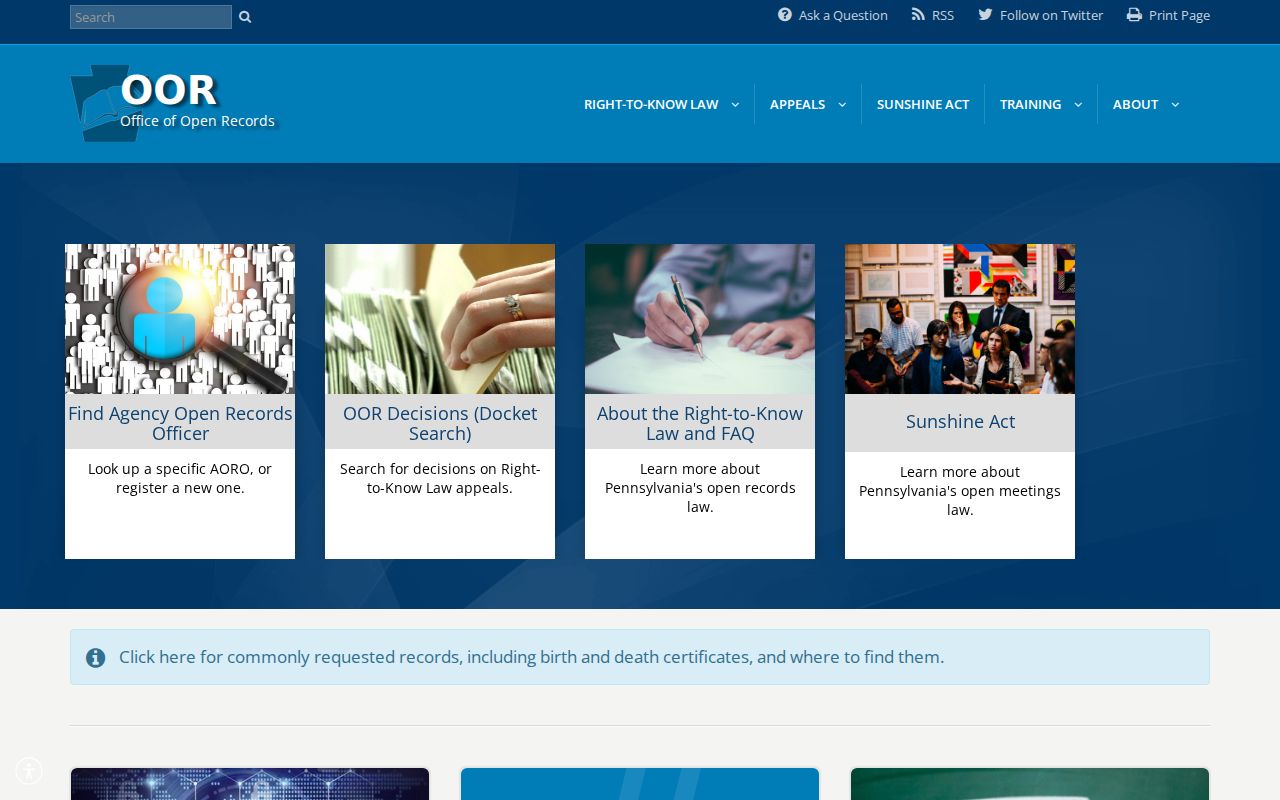
A precise records request preserves the custodian’s role and is the appropriate fallback when a public portal cannot supply a nonexempt record.
Use Easton State Name Tools
Some state databases supply a narrow lead rather than residence proof. The Pennsylvania Treasury unclaimed-property search accepts a last name or company name, with optional first name, ZIP, address, and city refinements. A CAPTCHA is required. A matching name or old address is only a claim lead, and the claimant or heir must establish entitlement. The Department of State business search is likewise an entity and file-number system, not an officer-name or current-address search.
The Pennsylvania Treasury search screen illustrates the official name-search channel.
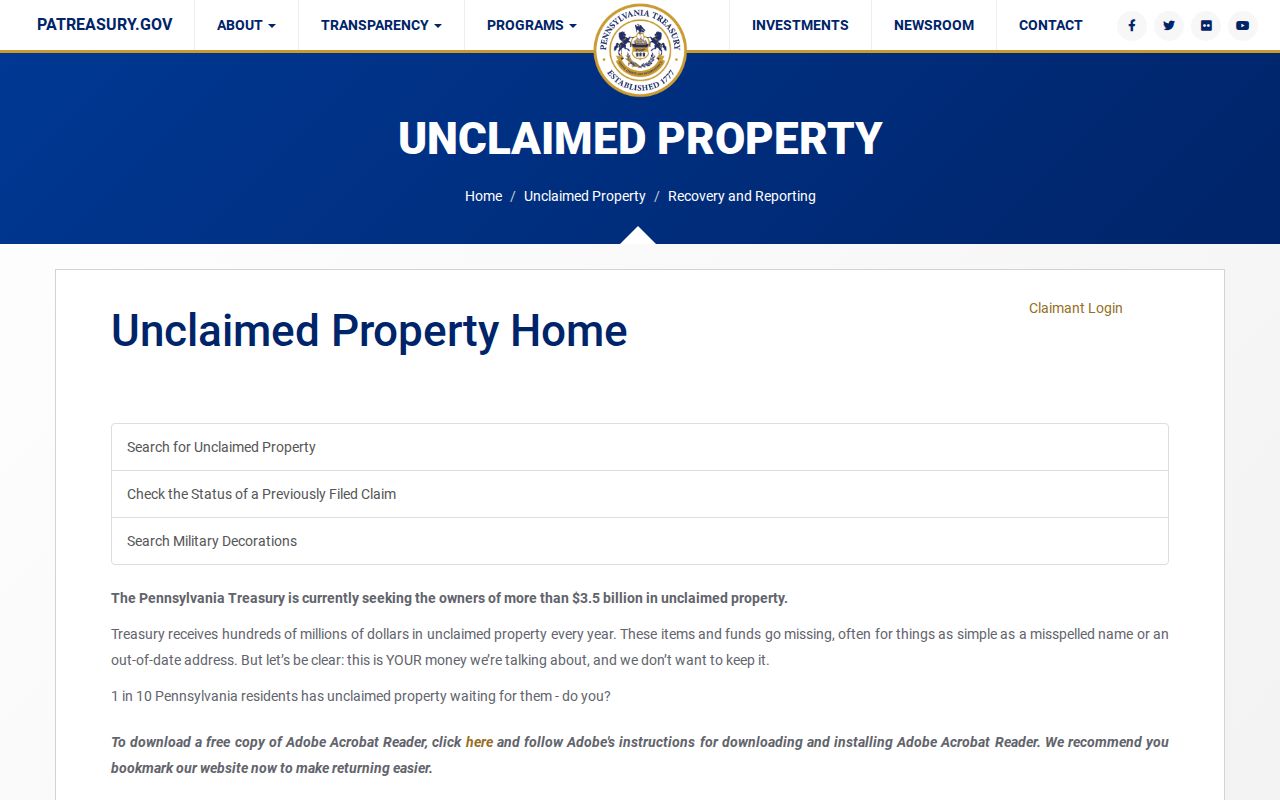
Use an official state result to identify the next custodian or claim process, not to make a conclusion about an Easton resident.
Protect Easton Resident Privacy
Public visibility has firm boundaries in Pennsylvania. RTKL excludes sensitive identifiers and several categories of personal contact, financial, family, and protected-address information. Court policy excludes Social Security and operator-license numbers and victim contact information. Current vital certificates have eligibility rules, and the Address Confidentiality Program protects actual participant addresses. A public parcel or docket result does not make every connected phone number, home address, household member, or file public.
Commercial people-finder products can combine stale or conflated data. They are not a substitute for the office that controls a deed, docket, license, vital certificate, or voter record. Verify an error with the relevant custodian. For a possible forged-transfer concern, the Pennsylvania Attorney General has warned about deed-fraud and property-ownership scams; use the official consumer-protection route rather than a message or unsolicited contact.
The Pennsylvania public-safety registry carries notices that also prohibit threats, intimidation, and harassment.
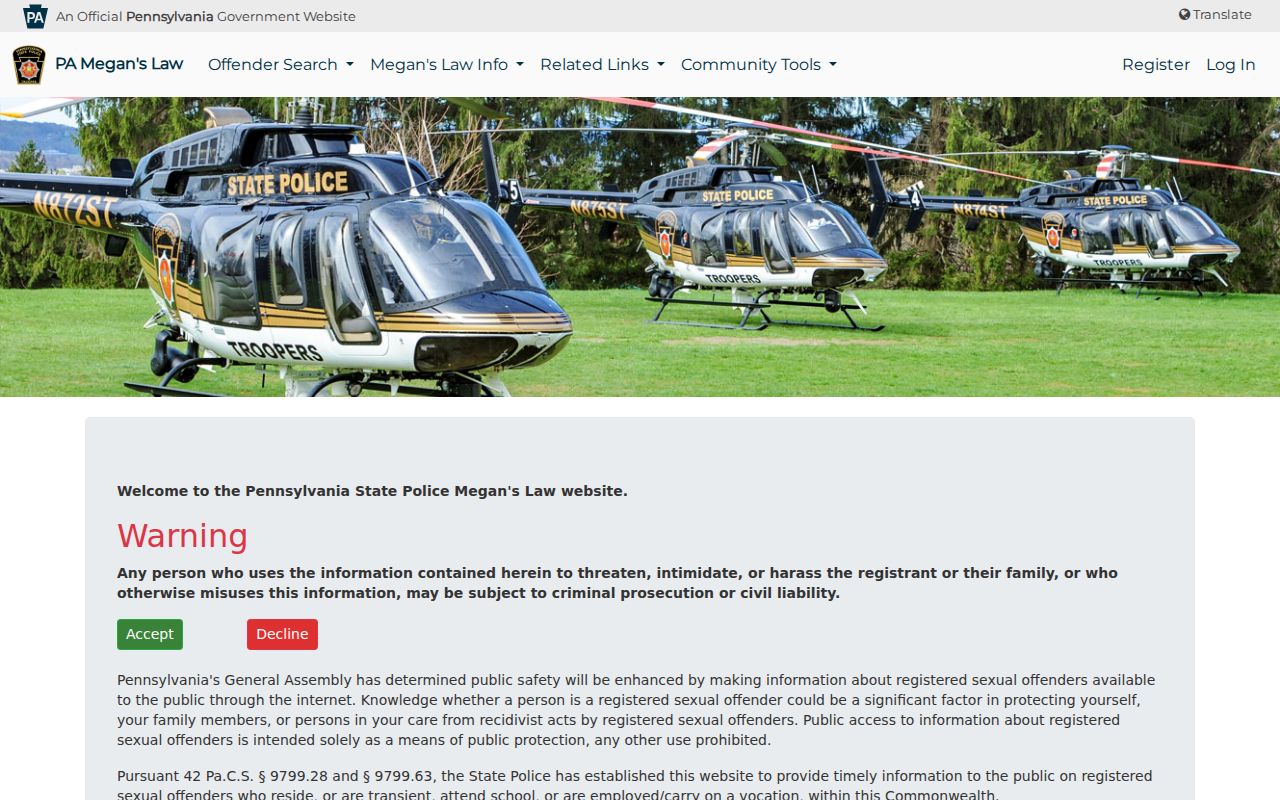
A public-safety search has its own statutory purpose and cannot be used to target, threaten, or harass any person.